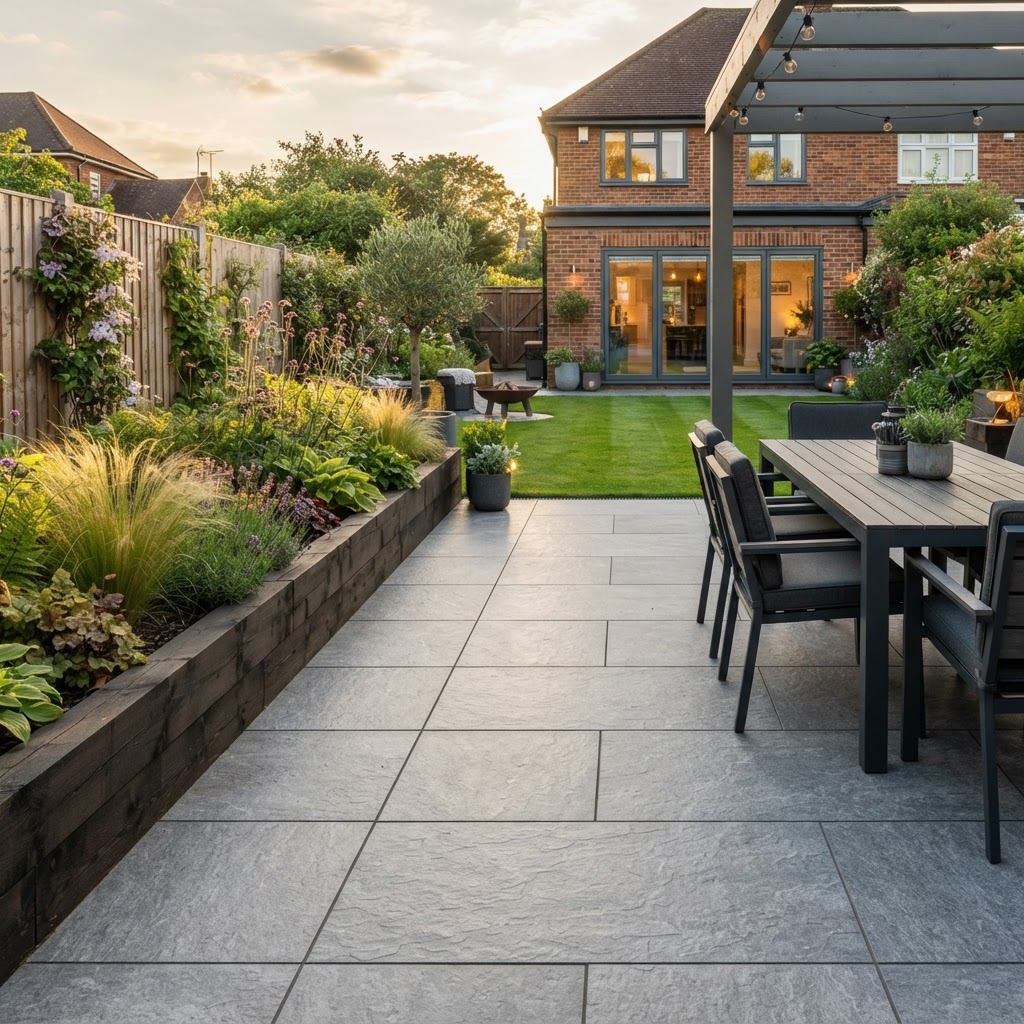
Two of Shropshire's most popular patio materials compared — durability, maintenance, cost and which suits your home best.
A Tale of Two Patios
When Shropshire homeowners ask us which patio material to choose, the conversation almost always comes down to two options: porcelain and Indian sandstone. Both are excellent, long-lasting surfaces — but they suit very different gardens, budgets and lifestyles.
Here's a straightforward guide to help you decide which is right for your Shropshire home.
Porcelain Patios: Sleek, Modern & Low Maintenance
Porcelain paving is fired at extreme temperatures, making it denser and harder than natural stone. The result is a flawlessly flat, low-absorption surface that refuses to stain, fade or attract moss.
Why choose porcelain?
- No sealing required — porcelain is virtually non-porous
- Stain-resistant — wine, BBQ grease and moss wipe clean
- Colour-fast — the colour runs through the full body of the tile
- Large-format — 600x600mm or 900x900mm tiles create clean, modern lines
- Perfect for contemporary extensions and bi-fold door setups
Things to consider
Porcelain costs a little more than Indian stone (typically £90–£140 per m² installed), and requires a full mortar bed with laser-levelled bedding to prevent lippage. This is not a DIY-friendly material — it needs an experienced team.
Indian Stone Patios: Natural Character & Timeless Appeal
Indian sandstone is the nation's favourite natural paving. Each slab carries its own unique blend of riven texture, mineral veining and tonal variation — giving your patio a warmth and character that no manufactured product can replicate.
Why choose Indian stone?
- Natural variation — every slab is unique
- Ages gracefully — weathers and mellows beautifully over time
- Mid-range price — typically £70–£110 per m² installed
- Perfect for traditional and cottage-style properties
- Range of colours — Raj Green, Autumn Brown, Kandla Grey and more
Things to consider
Indian stone benefits from sealing after laying to protect against staining, and should be re-sealed every 2–3 years. The riven (textured) surface offers excellent grip but is less smooth than porcelain.
Which Should You Choose?
| | Porcelain | Indian Stone | |---|---|---| | Look | Modern, architectural | Natural, traditional | | Maintenance | Very low — no sealing | Low — seal every 2–3 years | | Cost | £90–£140/m² | £70–£110/m² | | Best for | Contemporary homes | Period & cottage properties | | Lifespan | 25+ years | 25+ years |
The simple answer: choose porcelain for a sleek, modern, low-maintenance finish, and choose Indian stone for natural character and traditional warmth.
Get Expert Advice for Your Garden
Still unsure? That's exactly what our free site survey is for. We'll visit your Shropshire property, assess your garden and soil conditions, and recommend the right material for your home, style and budget — with no obligation.
Get your free quotation today, or explore our full range of patio services.
Ready to transform your garden?
Get a free, no-obligation quotation and site survey from our experienced team.
Get Your Free Quote